 The
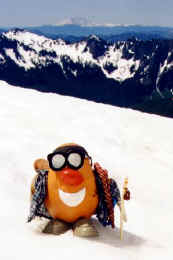
Assault on the Summit
The
Assault on the Summit
 The
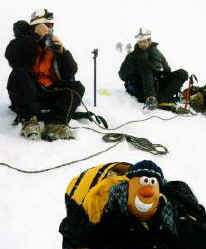
wake up call at 1:00 AM found Spud wired in his bed; eyes bulging with
bloodshot capillaries. Alex reminded his compatriot to make sure that
he kept his energy levels up as the high altitude can sap someone of their
strength very quickly. Reluctantly, he heeded his friend's advice and
devoured a rock-hard apple flavoured power bar and washed the lump down
with another litre of espresso. Once staples in his diet, the potato found
the taste becoming quite revolting.
The
wake up call at 1:00 AM found Spud wired in his bed; eyes bulging with
bloodshot capillaries. Alex reminded his compatriot to make sure that
he kept his energy levels up as the high altitude can sap someone of their
strength very quickly. Reluctantly, he heeded his friend's advice and
devoured a rock-hard apple flavoured power bar and washed the lump down
with another litre of espresso. Once staples in his diet, the potato found
the taste becoming quite revolting.
With headlamp on and all his climbing gear in place, Spud laboured his tired plastic cranium across the Cowlitz Glacier and up the moraine slopes of Cadaver Gap. At the top of the moraine, Spud rested once again and fueled up on the black nectar in his thermos.
Extremely tired, the tuber tried feverishly to focus on the upcoming section of the climb - the extremely dangerous Icefall of the Ingraham Glacier. The sun was rising and would help to light the way through this very treacherous area. Spud gulped down more of the espresso to try to keep his mind from wandering.
Each step became more and more difficult and the tuber found himself tripping on his crampons. Soon his mind was reeling and he began to cough up froths of black sputum. He fell to the snow and began to shake violently. His fellow climbers rushed to help the convulsing carbohydrate. Lead guide Alex Van Steen diagnosed that the tuber was suffering from HAEE (High Altitude Espresso Edema) or excessive caffeine to the brain. In a fight for his life, Van Steen radioed the Park Rangers for an emergency air lift rescue.
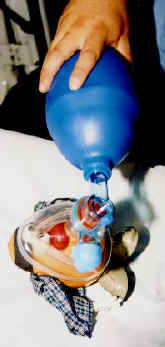 While
waiting for help to arrive, the climbers were able to stabilize Spud by
wrapping him in tinfoil to protect him from the fierce winds that were
lashing their 12500 foot location. Within minutes of the call for
help, a Life Flite helicopter was dispatched from a hospital in Vancouver,
Washington.
While
waiting for help to arrive, the climbers were able to stabilize Spud by
wrapping him in tinfoil to protect him from the fierce winds that were
lashing their 12500 foot location. Within minutes of the call for
help, a Life Flite helicopter was dispatched from a hospital in Vancouver,
Washington.
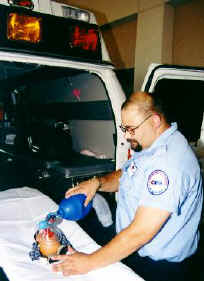
A short time later, the helicopter whisked the potato off the mountain and was enroute back to St. Joseph's hospital. Spud had fallen unconscious and the medical team struggled to find a pulse. Unable to detect any cardio activity, the medics launched into CPR to try to revive the comatose side dish. After a harried flight, the helicopter touched down in Vancouver while the EMS team still worked frantically to start his heart.
The chopper was met by the waiting trauma team who leapt into action. The chief resident on duty was quick to discover why the EMS team was unable to find a pulse - they had been giving CPR to an inanimate object.
More adventures of Spud in Washington